Topic

Fire protection

One of the most effective ways of protecting people within your business environment, as well as the actual building structure itself, is to ensure that a high quality fire alarm system has been professionally installed. BSI’s range of fire standards for fire detection and alarm systems can bring you complete peace of mind, whether you are a manufacturer or an installer.
Protecting against fire risk

Explore how standards enable organizations to manage fire risk effectively

Sound the alarm: Fire protection standards for alarm and detection systems
Article

Sound the alarm: Fire protection standards for alarm and detection systems

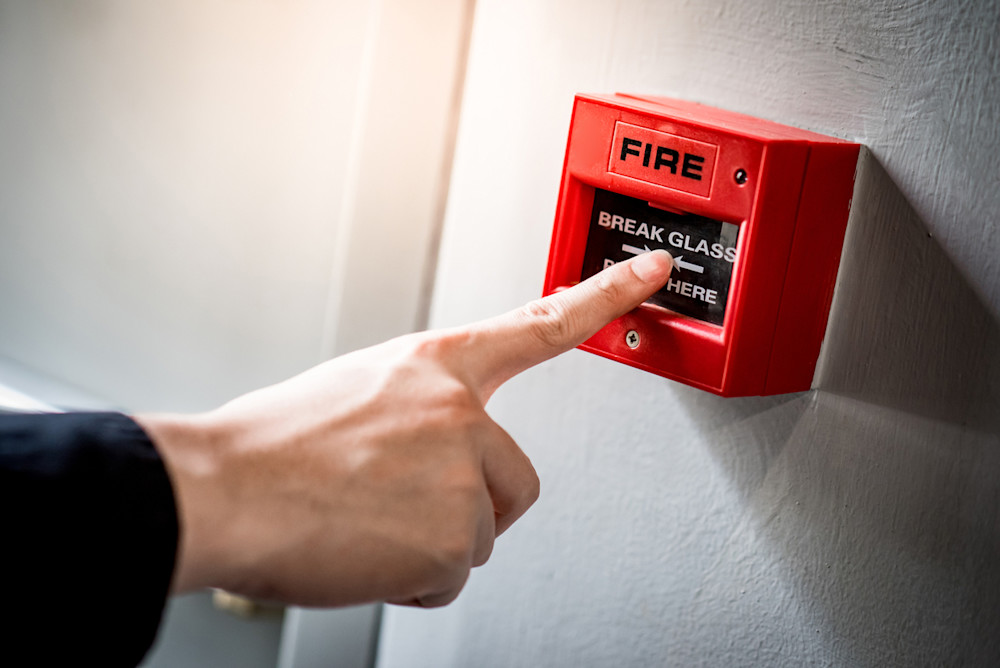
As the old saying goes, prevention is better than cure. This is also true when it comes to fire safety. Preventing fires from occurring is as important, if not more important than having properly working fire safety systems to deal with a fire incident. An uncontrolled fire can obliterate an entire room's contents within a few minutes and completely burn out a building in a couple hours. The main objective for organizations to protect themselves is to create an operating environment in which fires are prevented from starting in the first place. If a fire does break out, the aim is to prevent it from developing beyond a very minor event. A key aspect of fire protection is to identify a developing fire emergency in a timely manner, and to alert the building's occupants and emergency services - this is the role of fire detection and alarm systems. Depending on the anticipated fire scenario, building and use type, number and type of occupants, and criticality of contents and mission, these systems can provide several main functions. Firstly, they provide a means to identify a developing fire through either manual or automatic methods, and secondly, they alert building occupants to a fire condition and the need to evacuate. Another common function is the transmission of an alarm notification signal to the fire service or other emergency response organization. They may also shut down electrical or air handling equipment or special process operations, and they may be used to initiate automatic suppression systems. How can Standards Help Organizations with their Fire Protection? There are many contrasting approaches across the world in relation to fire safety, which have resulted in significant variations in the design, approval, construction methods, products, and operation of buildings. The development of common standards of building design, construction, and protection and how the impact of fire affects these, helps to build trust and confidence among the many and varied sectors. Standards aim to help organizations improve their performance, reduce their risk and become more sustainable. Fire safety standards are very important for the industry as they provide valuable information from fire protection to fire detection and alarm systems. British Standard BS 5839-1 is vital for fire protection, providing recommendations for the planning, design, installation, commissioning, and maintenance of fire detection and fire alarm systems in and around non-domestic premises. Anyone involved in the commissioning, installation, design, and planning of fire alarm and detection systems will find this standard useful, including: Head of Fire Engineering Commercial Manager Fire Consultant Fire Officer Fire & Safety Officer Principal Fire Surveyor Senior H&S Manager Fire Safety Advisor Ensure your organization is complying with fire protection regulations by adding standard BS 5839-1 to your collection today. Other Key Fire Detection and Alarm Standards BSI’s range of standards for fire detection products can bring you peace of mind whether you are a manufacturer or an installer. Other key fire protection standards for your organization include: Smoke Detectors - BS EN 54-7:2001 Sounders - BS EN 54-3:2014 Visual Alarm Devices - BS EN 54-23:2010 Voice Alarms - BS EN 54-16:2008 Manual Call Points - BS EN 54-11:2001 Want to access and manage the fire detection and alarm standards you need - all in one place? With a BSI Knowledge subscription, you will have the flexibility and visibility to manage the essential standards you need in order to work with confidence and comply to fire safety regulations. Build your own custom collection of standards, or opt for access to our GBM08 Fire, Accident & Crime Protection module and keep up-to-date with any relevant changes to your standards strategy. Request to learn more. To learn more about the fire detection and alarm safety standards available for your organization, download our brochure here.Read more
Understanding the emergency voice communication systems standard
Article

Understanding the emergency voice communication systems standard

The British Standard on emergency voice communication (EVC) systems has now been revised to reflect industry and legislative changes. Let's considers what the standard covers and the role of EVC systems.  According to British Standard BS 5839-9, an EVC system is one that allows voice communication in either direction between a central control point and a number of other points throughout a building or building complex, particularly in a fire emergency situation. Specifically, it’s a means of communicating during an emergency with people in refuges; with fire wardens, fire marshals, and firefighters in firefighting lobbies; and with stewards at sporting events. It is not - other than in exceptional circumstances - a means of raising a fire alarm. The standard has now been updated to reflect industry changes and the latest regulatory and legislative requirements for building evacuation. The revised version is BS 5839-9:2021 Fire detection and fire alarm systems for buildings Part 9: Code of practice for the design, installation, commissioning and maintenance of emergency voice communication systems. What’s in the standard? BS 5839-9:2021 exists to give guidance to those who specify, design, manufacture, install, commission, maintain and use emergency voice communication systems. The standard covers systems with components linked by wires, wirelessly, or a combination of both. It’s not intended to cover general purpose intercom systems, lift intercom systems, local (internal) telephone systems for general use, or any external communication systems, such as the public switched telephone network and cellular telephone networks. Nor does it cover voice alarm systems that are primarily intended for the automatic broadcasting of evacuation messages; these are covered by BS 5839-8. Nor does it recommend whether or not an emergency voice communication system should be installed or not on a given premises. What it does do, however, is give recommendations for the planning, design, installation, commissioning, and maintenance of EVC systems in and around buildings and at sports, entertainment, and similar venues as part of a fire safety strategy. It supplies comprehensive guidance on how to install an EVC from planning to training, monitoring, inspection, and certification. Life safety The standard is broken down into six main sections, with the first providing general information. It looks at terms and definitions; at the need for an EVC system; at the exchange of information and definition of responsibilities; and at variations from the recommendations given in the standard. Section 2 focuses on design considerations including purpose; system circuitry and software; audio and data signal paths; fault monitoring and indication; outstations; master stations; power supplies; cables, wiring, and other interconnections; wireless linked EVC systems; environmental conditions; electromagnetic compatibility; and electrical safety. Section 3 covers installation, including the responsibilities of the installer; installation practices and workmanship; and testing of wiring. Section 4 deals with commissioning and handover including documentation, certification, acceptance, verification, and training. Section 5 gives maintenance recommendations including routine testing, inspection and servicing, and non-routine attention. The sixth and final section concentrates on user responsibilities and includes guidance on how to keep a logbook. Annexes A, B, C, and D give informative and normative information that includes access levels; how to calculate standby battery capacity; and model certificates. Emergency voice communication systems are used in connection with life safety and must, therefore, be subject to high standards of design, manufacture, installation, commissioning, and maintenance. This code of practice is important because its use can help ensure that high standards of reliability, safety, and security are achieved, together with acceptably high standards of performance. Want to access and manage the standards you need to support your EVC systems - all in one place? With a BSI Knowledge subscription, you will have the flexibility and visibility to manage the essential standards you need to ensure the safety and compliance of your emergency systems with confidence. Build your own custom collection of standards, or opt for access to our pre-built module and keep up-to-date with any relevant changes to your standards strategy. Request to learn more. Learn more about BS 5839-9:2021 or buy it now.
BS 7273-4 : A standard for safe fire doors
Article

BS 7273-4 : A standard for safe fire doors

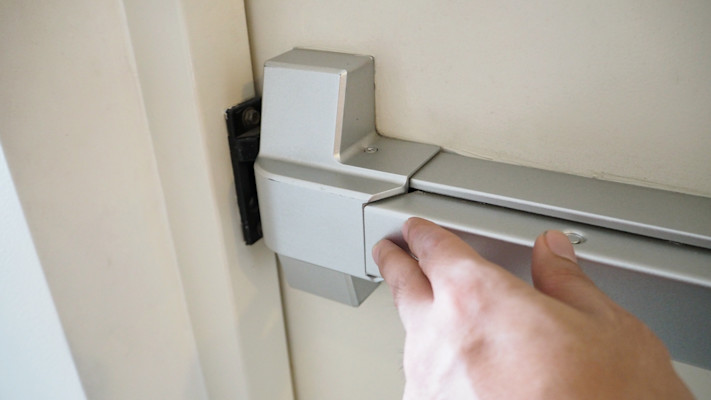
The British Standard on activating release mechanisms for doors in the event of a fire was amended last year, to reflect recent research and experience. Fire doors are typically designed to be kept closed at all times so that heat and fire are contained. However, there are occasions when doors should be held open, either to help people escape or to give firefighters access. In these instances, it’s common for there to be an interface, or interfaces, between fire detection and alarm system and various forms of door hardware. Typically, such interfaces will hold open self-closing fire-resisting doors; secure doors that are a means of escape; or power sliding doors that might be required to stay open permanently when the fire detection and alarm system is triggered. To help ensure the safe operation of these interfaces, BS 7273-4:2015+A1:2021 Code of practice for the operation of fire protection measures – Part 4: Actuation of release mechanisms for doors covers the electrical control arrangements for actuation of the mechanisms that unlock, release, or open doors in the event of a fire. The standard gives recommendations for the design, installation, commissioning, and maintenance of electrical control arrangements. It applies to all aspects of the interface between these mechanisms and fire detection and fire alarm system, including interfaces that incorporate acoustic coupling and radio transmission. As such, the standard covers the safety-critical arrangements that enforcing authorities rely on to ensure a building can be evacuated safely. In your safety-critical industry, ensure you are meeting the industry standards. A BSI Knowledge subscription gives you instant access to the resources you need to effectively meet fire safety specifications and build trust throughout your supply chain. Build your own custom collection of standards, or opt for access to our pre-built GMB08 Fire, Accident & Crime module and keep up-to-date with any relevant changes to your standards strategy. Request to learn more. Prompted by research The 2021 standard is an amended version of the 2015 code, which was itself a second, and fully revised edition of the standard first published in 2007. The 2021 amendment was prompted by research conducted by the Business Engagement Forum (BEF) – a collaboration between the Scottish Fire and Rescue Service and others on initiatives to improve fire safety in Scotland. Their research concluded that confusion can occur between red break glass call points and door release units on electronically locked doors, leading to unwanted alarms. It led to the recommendation in BS 5839-1:2017 that Manual Call Points are now fitted to manual call points in all new fire alarm systems. In addition, the BEF wanted this issue further highlighted in the next review of BS 7273-4 and suitable recommendations added that would further address the issue. Greater clarity In addition, the committee responsible for the standard also wanted to provide clarity on when a door may be secured with a panic bar (or also known as a panic latch). There have been several incidents in recent years where vulnerable people (such as those with dementia) have been able to use a panic latch to access areas they otherwise should not have been able to. These incidents established that the risk of those living with dementia passing through an exit door secured only with a panic latch is not simply hypothetical. Moreover, when BS 7273-4 was first drafted, the committee acknowledged that the normal means of releasing electronically locked doors could be omitted in certain high-security situations, such as the landside/airside interface at airports, or mental health units, where the release of a patient could result in a risk to the general public. However, at that point, the standard said nothing about the situation in care homes. It’s now quite common practice to use maglocks in care homes. The amended standard now makes it clear that this is acceptable. Lastly, the amendment also clarifies that the normal green break glass might, subject to a risk assessment, be omitted or subject to a variation in siting: for example, the green break glass is sometimes installed at a high level (around arms reach), the theory being that those living with dementia tend to look ahead or downwards, but not upwards, and are not likely to reach up to operate a green break glass. In summary, the amendments to BS 7273-4:2015+A1:2021 have helped clarify the expectations of users and matched the standard to the technology available to the fire alarm industry. They’ve also contributed to a standard that will increase fire safety, which is the ultimate objective. Learn more about BS 7273-4:2015+A1:2021 or buy now.

Key Fire Protection Standards

Trending Topics in Fire Protection