Topic

Fire safety in construction

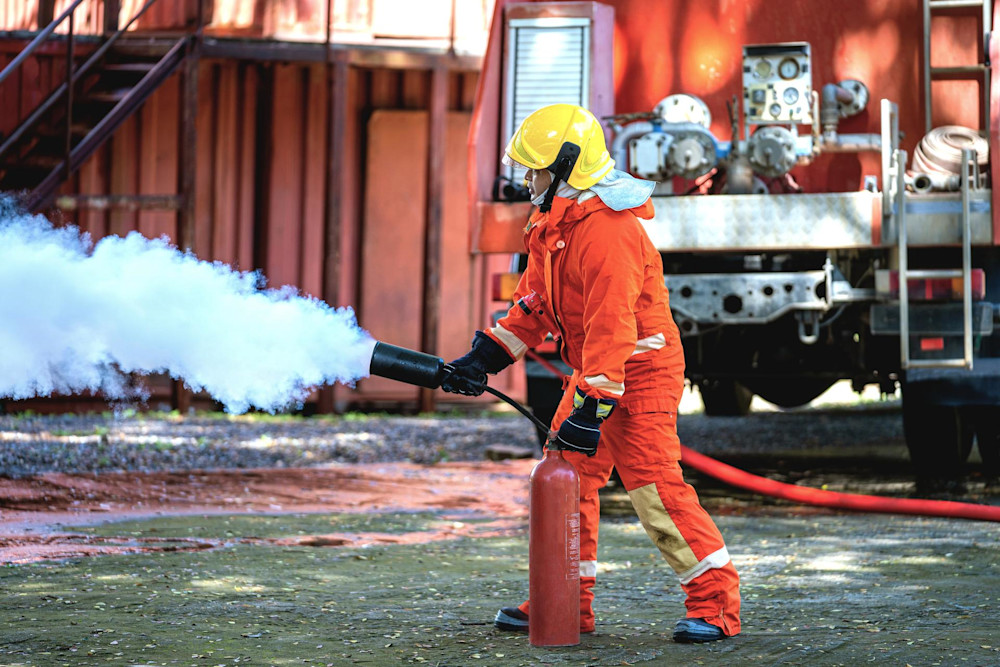
Fire safety risks on a construction site must be assessed and appropriate measures taken to reduce them to a minimum. When construction activities are not adequately controlled there is a risk of harm to construction workers, members of the public, and the properties adjacent to construction sites. Fire safety standards can help construction organizations manage these fire risks effectively.

Reducing the risk of fire harm

Discover how standards can help you protect your workers and construction sites from fire risks

BS 9991: A comprehensive update to the UK’s essential fire safety standard
Article

BS 9991: A comprehensive update to the UK’s essential fire safety standard

The latest revision of BS 9991 - the UK's key fire safety standard for residential buildings - represents a critical advancement in fire safety regulation.  As fire safety concerns have evolved, the new edition incorporates essential updates designed to enhance safety in the design, management, and use of residential buildings.  Here, we’ll explore the significance of the upcoming BS 9991:2024 Fire safety in the design, management and use of residential buildings - Code of practice, the key changes being introduced, and why adopting this standard is vital for anyone involved in residential building safety. Get your copy of the standard here. What is BS 9991? BS 9991 is a code of practice standard that offers comprehensive guidance and recommendations for ensuring fire safety in residential buildings. First introduced as a British Standard in 2011, it serves as a primary reference for achieving fire protection measures, safeguarding lives, and minimizing property damage in the event of a fire. It covers a wide range of building types, from apartment blocks and flats to residential care homes. The objective of the standard is twofold: To ensure an adequate standard of life safety in the event of a fire, focusing on occupant safety, firefighter safety, and the protection of emergency services. To offer property protection, safeguarding not only the building in question but also adjacent properties, businesses, and the environment. BS 9991 bridges the gaps between different regulatory frameworks in the UK, providing a unified approach to fire safety that can be applied nationally. Explore our library of fire-related standards and the benefits they can bring to your organization by visiting our Fire topic page.  What are the key changes in BS 9991:2024? The upcoming  2024 revision brings significant updates.  These reflect the increasing complexity of modern building designs and the evolving knowledge of fire behaviour, materials, and fire safety systems.  The key changes include: Expanded scope: BS 9991 now covers residential care homes, recognizing the unique evacuation needs and fire safety challenges unique to those properties.  Explicit exclusions on timber have been removed: The scope of the standard has been limited in terms of reaction-to-fire classifications of load-bearing elements of structure to better reflect the available evidence regarding the use of mass timber in medium and high residential buildings. Revised guidance for sprinklers and single-stair buildings: Updates include a new height limit for single-stair buildings and adjustments to sprinkler installation guidelines. European classifications for fire doors: National fire door classifications have been replaced with European classifications to ensure consistency and reliability in fire resistance. Enhanced recommendations for smoke control and evacuation lifts: Improved provisions for smoke control systems and detailed recommendations for evacuation lifts, making tall buildings safer in fire emergencies. Updates on ancillary areas, kitchens, and external wall systems: The recommendations for these areas have been revised to account for the latest safety practices. The 2024 edition offers a robust framework for fire safety in residential buildings, accommodating advancements in building technology while maintaining practicality. For more detailed information on BS 9991:2024, you can download the free executive briefing here. What are the benefits of the revised BS 9991:2024? BS 9991:2024 provides the most comprehensive and up-to-date recommendations for fire safety in residential buildings, ensuring the highest level of protection for both occupants and the building itself.  The revised standard addresses the complexities of modern building design, including mixed-use and high-rise structures, offering solutions for even the most challenging fire safety scenarios.  The 2024 edition integrates the latest advancements in fire safety knowledge, providing a future-proof approach to the design and management of residential buildings. Who should use BS 9991:2024 and why?  BS 9991:2024 is essential for a wide range of professionals involved in the design of new buildings, as well as material alterations, extensions, and changes of use to existing buildings. Users of the standard include:  Designers and Architects: BS 9991 offers a clear and authoritative guide to integrating fire safety into the design process, ensuring that buildings are constructed with the latest fire safety technologies and methods. Fire Safety Engineers and Risk Assessors: The revised standard provides detailed guidance on fire safety risk assessments and offers updated methodologies to tackle emerging fire safety challenges. Building Owners and Managers: Following BS 9991 helps maintain legal compliance, reduce liability, and ensure the protection of residents and properties in the event of a fire. Fire and Rescue Services: BS 9991 helps fire services by providing standardized design and operational procedures that make firefighting and rescue operations more efficient and effective. Whether you are designing a new building or making material changes to an existing one, this standard provides the tools to ensure compliance with fire safety regulations and to mitigate fire risks. Stay informed, stay up to date, and ensure your buildings meet the highest standards of fire safety. Get your copy of BS 9991:2024 today.Read more
Lighting the way forward: What you need to know about BS 5266-1:2025
Article

Lighting the way forward: What you need to know about BS 5266-1:2025

Emergency lighting is one of the quiet heroes of building safety. Most of the time it goes unnoticed, but when it is needed, it provides clarity, reassurance, and direction. In workplaces, shopping centres, hospitals, and transport hubs, well-designed emergency lighting ensures that people can move safely, find exits, and remain calm even when the unexpected happens. The publication of BS 5266-1:2025 Emergency lighting. Code of practice for the emergency lighting of premises, the revised British Standard for emergency lighting, is therefore an important step forward. The new edition does more than refresh guidance. It expands the scope of the standard, reflects advances in technology, and supports a more complete approach to safety in modern buildings. For those responsible for people and premises, this is an opportunity to improve resilience, demonstrate best practice, and strengthen confidence in the systems that protect us all. What is BS 5266-1:2025? BS 5266-1:2025 is the latest edition of the UK’s code of practice for the emergency lighting of premises. First developed decades ago, the standard has long provided guidance to ensure that systems meet the performance requirements necessary for safety. The 2025 revision reflects both changes in European standards and the practical experiences of professionals who design, install, and operate emergency lighting systems. The document is more than a set of technical instructions. It is a framework for best practice. It aims to promote a consistent approach across different categories of premises while accommodating variations in hazard levels and the familiarity of occupants with their environment. By following its recommendations, building owners, contractors, and regulators can achieve a higher degree of uniformity, reducing confusion and risk. Key changes in the BS 5266-1:2025 revision The most notable update in BS 5266-1:2025 is its expanded scope. In addition to emergency escape lighting, the traditional focus of previous editions, the new version now explicitly addresses local area lighting and standby lighting. Emergency escape lighting continues to cover the illumination needed to guide people to a safe exit during an emergency. Local area lighting provides illumination to specific points or tasks, ensuring people can safely complete vital activities in the event of power failure. Standby lighting is designed to allow normal activities to continue when the main power supply is lost. This broader view acknowledges the realities of modern building use. In many facilities, evacuation is not the only scenario to consider; sometimes, protecting occupants who remain in place or enabling continuity of essential operations is just as critical. The 2025 revision also aligns BS 5266-1 with changes in EN 1838 and EN 50172, the European standards that define lighting requirements. This alignment strengthens the UK’s consistency with international best practice while ensuring that local application remains clear and practical. Finally, the new edition places stronger emphasis on uniformity of application. The recommendations have been drawn up to encourage a consistent level of safety, regardless of building type, while still acknowledging differences in risk profile. Who should use BS 5266-1:2025? BS 5266-1:2025 is not just for lighting designers. It is relevant to a broad community of professionals and organizations, including: Local authorities and regulators, who need clear benchmarks for enforcement and compliance. Insurers and trade bodies, who rely on consistent standards to evaluate risk. Safety and fire professionals, who are responsible for safeguarding people in diverse environments. Engineers, contractors, and developers, who must incorporate emergency lighting into projects at every stage of design and construction. Responsible persons under UK fire safety legislation, who carry legal duties to ensure safe evacuation and occupant protection. Essentially, if a building has a public or communal aspect, from offices and retail premises to healthcare facilities and transport hubs, BS 5266-1:2025 provides the guidance needed to manage emergency lighting effectively. Looking to strengthen your approach even further? Browse our full portfolio of built environment standards - from fire safety and risk management to construction competence frameworks - and make sure your organization is meeting the latest best practice across every area of building safety. What are the benefits of adopting BS 5266-1:2025? Adopting the new standard delivers benefits beyond compliance. First and foremost, it enhances life safety, ensuring that people can leave a building safely or remain protected if evacuation is not possible. It also provides peace of mind for organizations, knowing that systems have been designed and installed according to current best practice. The standard also promotes efficiency and consistency. By following a common framework, contractors and designers can reduce misunderstandings, improve interoperability, and streamline maintenance. For multi-site organizations, this uniformity is especially valuable, enabling consistent levels of safety across a diverse portfolio. Finally, the adoption of BS 5266-1:2025 supports reputation and resilience. Organizations that can demonstrate alignment with the latest standards show stakeholders, from employees to regulators, that they take safety seriously. This not only reduces liability but also strengthens trust. Looking ahead in UK building safety The revision of BS 5266-1 is part of a broader trend in building safety: the move towards more comprehensive, integrated approaches. Just as fire detection, suppression, and evacuation strategies have become more sophisticated, so too must emergency lighting evolve. BS 5266-1:2025 represents a step forward in this journey. It recognizes that safety is not only about getting people out but also about supporting them if they must stay in, ensuring continuity of operations, and reducing the risk of panic. It places the UK at the forefront of best practice while aligning with international developments. By adopting the standard, you not only comply with regulations but also demonstrate a commitment to protecting people, reducing risk, and promoting trust. Whether you are a regulator, contractor, designer, or responsible person, the message is clear: now is the time to align with BS 5266-1:2025. Get your copy of BS 5266-1:2025 today.
 Meet the standards reshaping fire safety in the UK
Article

Meet the standards reshaping fire safety in the UK

In the wake of increased scrutiny and rising expectations, fire safety in the UK is undergoing a significant transformation. The latest revisions to BS 9991 and BS 5839-1, alongside the introduction of BS 8670-1, reflect a deeper cultural shift. One that places greater emphasis on competency, accountability, and performance across the built environment. A new era of fire safety awareness No one in the fire safety profession can ignore the profound changes sweeping through the UK industry. The tragic consequences of fire events in recent years have sparked a renewed call to action for greater vigilance, tighter regulation, and a fire safety culture that extends far beyond compliance. Today, the spotlight is on the entire lifecycle of a building: from design and construction to installation, commissioning, and ongoing maintenance. Every stakeholder - be it a designer, installer, or building owner - is now expected to adopt a proactive approach and demonstrate a deep understanding of modern fire safety practices. Explore how standards are supporting all areas of fire management by visiting our Fire Topic Page. BS 9991: Robust framework for residential fire safety The newly revised BS 9991:2024 Fire safety in the design, management and use of residential buildings - Code of practice sets the tone for this new fire safety landscape. As the UK’s key standard for fire safety in residential buildings, BS 9991 now reflects: Expanded coverage to include residential care homes, addressing the complex needs of vulnerable occupants. Clarified guidance for the use of mass timber in structural elements, replacing outdated restrictions with evidence-based recommendations. Revised approaches for single-stair buildings, sprinklers, fire doors (now classified using European standards), smoke control, and evacuation lifts. Updated recommendations on ancillary spaces, kitchen safety, and external wall systems. Together, these changes ensure BS 9991 offers a future-proofed, comprehensive, and practical guide to designing safer living environments. As of June 2025, BS 9991:2024 now includes a corrigendum to take into account feedback received since publication. Learn more about this standard by reading our article BS 9991: A comprehensive update to the UK’s essential fire safety standard. BS 5839-1: Supporting safe occupancy in non-domestic premises Where BS 9991 sets the benchmark for residential buildings, BS 5839-1:2025 Fire detection and fire alarm systems for buildings - Part 1: Design, installation, commissioning and maintenance of systems in non-domestic premises - Code of practice reinforces fire protection in non-domestic premises. The updated standard aligns with modern fire detection technologies, streamlines system design, and mirrors real-world industry practices. Key updates include: A complete restructuring and clause renumbering to improve usability. A new Section 7 addressing system extensions and modifications. Clarified siting's of manual call points and requirements for recording all variations. Stronger guidance on automatic detection in sleeping areas. Updated battery calculations and service visit intervals. Whether you’re responsible for a small office or a large commercial complex, BS 5839-1:2025 delivers essential tools to safeguard lives and properties. Discover more about this standard by reading our article A guide to the changes in fire alarm system standard BS 5839-1. BS 8670-1: Establishing competency across the industry Regulatory evolution is not just about what we build. It’s about who builds it and how well they understand their responsibilities. That’s where BS 8670-1:2024 Competence frameworks for building safety - Core criteria - Code of practice comes in. BS 8670-1 marks the beginning of a new suite of standards aimed at establishing consistent and measurable criteria for fire safety competency. Initial frameworks already cover key duty holders such as: Main contractors; Building owners; and Lead designers. Further guidance is in development for fire risk assessors, installers, and maintainers of active fire systems, placing a clear emphasis on verified knowledge, relevant work experience, and a fire-aware mindset. The cultural shift: From compliance to competency Whether you're designing residential spaces, managing commercial fire alarm systems, or training your team on fire safety roles, these new and revised standards give you the structure to succeed. What unites these standards is more than their technical content. Together, they signal a shift in how fire safety is approached across the industry: From box-ticking to best practice From minimum standards to maximum resilience; and From isolated responsibilities to collaborative, system-wide thinking The call for a new fire safety culture is clear, and it starts with education, competency, and the adoption of industry standards. Be part of the change and get yours today. Discover BSI Knowledge Want to access and manage the standards you need all in one place? With a BSI Knowledge subscription, you will have the flexibility and visibility to manage the essential standards you need. Build your own custom collection of standards or opt for access to our pre-built modules and keep up to date with any relevant changes to your standards strategy. Request to learn more.
Defining competence: The role of BS 8674:2025 in modern fire risk assessment
Article

Defining competence: The role of BS 8674:2025 in modern fire risk assessment

The introduction of BS 8674:2025 marks a pivotal moment in the ongoing evolution of safety and competency within the built environment. Developed in alignment with regulatory reforms and increasing expectations on fire safety, BS 8674:2025 Built Environment – Framework for Competence of Individual Fire Risk Assessors – Code of Practice delivers a structured, transparent and verifiable framework for defining individual competence in fire risk assessment. Its importance extends across a spectrum of stakeholders, from individual practitioners to regulatory authorities and professional bodies, and it arrives at a time of significant cultural and legislative shift in how safety is managed within our buildings. Post-Grenfell landscape and regulatory reform The tragic Grenfell Tower fire in 2017 served as a watershed moment for fire safety regulations in England and Wales. It exposed widespread inadequacies in the competence of those tasked with assessing and managing fire risk. In response, the Government introduced the Building Safety Act 2022. Though yet to be applied, a new requirement was created for building owners (Responsible Persons) to ensure that fire risk assessments are carried out by competent individuals. This new legislative environment led to the development of BS 8674:2025. Join us for an exclusive member event in London on 5 November. We'll explore the changing landscape of construction product regulations. Learn how upcoming reforms will affect UK businesses and gain practical guidance to ensure your organisation remains compliant, competitive, and ready for the future. Book your place here. Understanding the scope and purpose of BS 8674:2025 The standard provides recommendations for competence criteria that individual fire risk assessors are expected to meet to be deemed competent for conducting fire risk assessments in occupied buildings. It offers a common, consistent set of expectations that can be used by assessors, employers, certification bodies and regulators. Key features of BS 8674 include: Defines three competence levels: Foundation, Intermediate, and Advanced, offering a career pathway and measurable progression for assessors. Focuses on non-invasive assessments based on visual examination and relevant records. Aligns with the core framework outlined in BS 8670-1:2024, enabling consistency across the wider built environment competency framework.  This standard specifically addresses the competence of individuals, not organizations, and is limited to general fire risk assessments. It excludes competence relating to fire risk appraisals of external walls (FRAEWs), invasive inspections and fire engineering services. Visit our Built Environment industry page to explore the role of standards in shaping a safer, more resilient future. What the standard covers and what it doesn’t cover BS 8674:2025 defines what a fire risk assessor is expected to be able to do at each level of competence, including: Understand a building’s construction, use and occupancy. Evaluate fire risk through systematic analysis. Identify measures for fire prevention, protection and safety management. Interpret documentation, including prior reports and maintenance records. The three levels of competence outlined in the standard are: 1. Foundation: For assessors working in low-risk environments such as small offices or shops. 2. Intermediate: For those assessing medium complexity buildings, such as public venues or mid-rise residential properties. 3. Advanced: For highly experienced professionals working in complex, multi-occupancy environments, where advanced risk understanding is necessary (e.g., care homes, large residential blocks). This tiered structure is designed to prevent assessors from overstepping their capability and enables organizations to match the right level of expertise to the risk profile of the building. It’s also important to understand that BS 8674:2025 deliberately: does not prescribe how to perform a fire risk assessment; that is the domain of PAS 79-1 and BS 9792:2025. excludes assessments requiring destructive inspection, fire engineering, external wall analysis, and assessments in specialist environments (e.g. nuclear facilities). does not cover the design, testing or maintenance of fire protection systems. These exclusions enable BS 8674:2025 to remain a focused tool for individual competence, rather than a procedural guide. Who would benefit from using BS 8674:2025? 1. Fire Risk Assessors For practitioners, BS 8674:2025 is transformative. It provides: A structured competency framework they can use to demonstrate capability. A clear career progression route, from Foundation to Advanced. A benchmark to seek certification or professional recognition where such schemes are available. 2. Professional Bodies and Trade Associations BS 8674:2025 supports organizations in: Validating the competence of their members. Guiding membership criteria, CPD development and disciplinary procedures. Providing a reference standard for collaboration with regulators or insurers. 3. Certification Bodies This standard enables: Third-party verification schemes for individual assessors, improving public trust. Objective, consistent assessment of applications, audits and renewals. 4. Academic and Training Institutions The standard lays the groundwork for: Developing curricula and qualifications that reflect real-world competence needs. Creating practical training programmes aligned with industry expectations. Supporting learners to transition from education into professional roles with clarity and assurance. BS 8674:2025 in the context of broader reform This standard does not stand in isolation. It was developed by CPB/1, BSI’s technical committee for competence in the built environment, as part of a cohesive programme of standards supporting the Industry Competence Steering Group (ICSG) - formerly the Competence Steering Group (CSG). The standard reflects the recommendations of CSG Working Group 4, which specifically focused on fire risk assessors. It aligns with BS 8670-1:2024 and fits within a larger body of competence standards that aim to: Improve life safety outcomes. Create a more professionalized workforce. Enhance accountability across the building lifecycle. BS 8674:2025 thus becomes an essential instrument in realizing the aspirations of the Building a Safer Future report and the Hackitt Review. Help us create a competent built environment BS 8674:2025 fills a long-standing gap in the UK’s fire safety landscape. It provides the structured, scalable and transparent competence framework that fire risk assessors need. One that aligns with new legal duties under the  Building Safety Act 2022 and complements other standards such as PAS 79-1, BS 9792, PAS 9980 and BS 8670-1. This standard lays the foundation for a professional, recognized and accountable fire risk assessor community. Through measurable competence, we inch closer to a built environment where safety is not an aspiration, but a guarantee. Get your copy of BS 8674:2025 today.

Key Fire Safety Standards for Construction

Fire safety solution packs

Get all the guidance you need - in just one place