Topic

Water

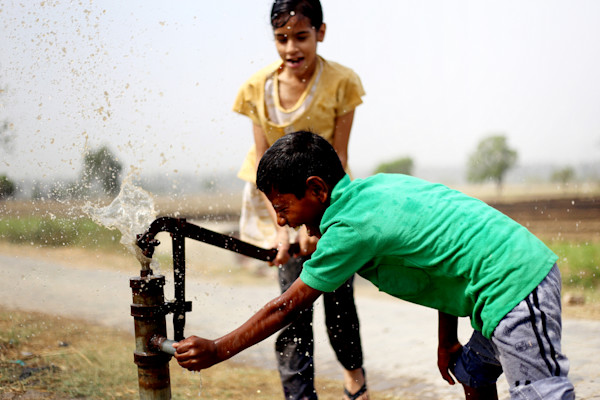
Droughts, floods and water pollution place pressure on our global water supply and impact its quality. Standards provide practical solutions to many of these challenges. Water standards help us to protect public health and the environment, maintain a high level of water quality consistent with its uses, and ensure we are managing this valuable resource efficiently so that it can be used by generations to come.

Efficiently managing our most significant resource

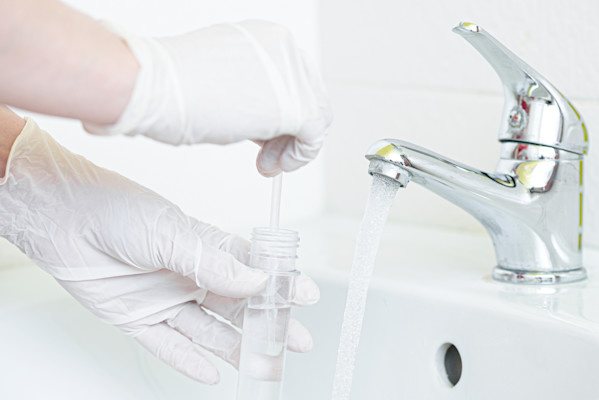
Explore how standards help ensure the quality and sustainability of water

Tackle microplastic pollution in water with BS ISO 5667-27
Article

Tackle microplastic pollution in water with BS ISO 5667-27

Plastic pollution is now a defining issue of modern life, with microplastics - tiny plastic particles less than 5 millimetres in size - found everywhere from the deepest oceans to drinking water. Microplastics infiltrate ecosystems, harm marine life, and pose unknown risks to human health. Until now, however, there has been no universally accepted approach to sampling microplastics in water, which has hampered efforts to understand the extent of the problem and regulate it effectively. BS ISO 5667-27:2025 Water quality - Sampling - Part 27: Guidance on sampling for microplastics in water is a new standard that provides a standardized methodology for sampling microplastics in various water sources, including domestic water, freshwater, seawater, treated and untreated wastewater. By adopting a uniform set of protocols, this standard helps researchers and regulators obtain more accurate, comparable data on microplastic contamination, supporting critical research and informing regulatory actions. BS ISO 5667-27 sampling methods for suspended microplastics BS ISO 5667-27:2025 focuses on sampling methods for suspended microplastics in water. It outlines basic approaches, including: Grab sampling, a method of collecting a water sample at a specific point in time. Cascade filtration, which involves passing water through a series of filters with different pore sizes to separate microplastics based on size. Net sampling, which employs nets such as manta, plankton, or neuston nets to collect microplastics from the water. These methodologies address the complexity of microplastics, which vary in size, shape, buoyancy, and level of colonization by microorganisms. Importantly, the standard does not cover chemical, biological, or physical analysis methods, focusing purely on the sampling aspect. Learn more about how standards are supporting water quality by visiting our Water topic page. Who should use BS ISO 5667-27? BS ISO 5667-27:2025 is designed for a wide range of users who are involved in water quality monitoring and environmental protection, including: Water treatment and purification companies: To assess and improve their processes for removing microplastics from water. Government agencies and regulatory bodies: To support the development and enforcement of regulations concerning microplastic pollution.  Academic and research institutions: To standardize research methods in studies on microplastics and environmental health. Environmental consulting firms: To provide expert guidance and consulting services on microplastic sampling and mitigation strategies. 5 benefits of using BS ISO 5667-27? This new standard offers several key benefits to its users: 1. Improved data consistency: By standardizing sampling methods, BS ISO 5667-27 reduces variability in data collection, allowing for more accurate comparisons across different studies and regions. 2. Targeted research support: Researchers can now apply a more specific and standardized approach to microplastic sampling, which will enhance understanding of how these particles move through and affect the environment. 3. Enhanced regulation: Government agencies and regulatory bodies can use the standard to develop clearer, evidence-based regulations on microplastic pollution, helping to curb its release into the environment. 4. Support for water treatment improvements: Water treatment companies can assess the efficiency of their processes in removing microplastics, potentially leading to technological innovations in purification systems. 5. Global applicability: As part of the BS ISO 5667 series, this standard can be applied internationally, facilitating collaborative efforts to address a global environmental challenge. To learn more about what this standard covers and its benefits, download our free Executive Briefing here. Understanding the BS ISO 5667 series BS ISO 5667-27:2025 is part of the broader BS ISO 5667 series, which provides comprehensive guidance on sampling for water quality. Key related standards include: BS ISO 5667-1: General guidance on water sampling. BS ISO 5667-3: Guidance on the preservation and handling of water samples. BS ISO 5667-17: Guidance on the sampling of bulk suspended solids. These standards together form a robust framework for assessing various water quality parameters, with BS ISO 5667-27:2025 addressing the specific challenges posed by microplastics. In an era where plastic pollution poses significant threats to ecosystems and human health, BS ISO 5667-27:2025 offers an essential tool for researchers, regulators, and industry professionals alike. Get your copy here today. Thirst for Change: Accelerating progress to a water secure world At BSI, we believe individuals and organizations can come together to accelerate progress towards a sustainable world, one in which there is a reliable supply of essential freshwater. Read more here or watch the video.Read more
Be water aware: Two water safety standards you should know about
Article

Be water aware: Two water safety standards you should know about

When we turn on the tap in the office kitchen to get a refreshing glass of water or to clean our hands in the office bathrooms, most of us take it for granted that these are all safe actions. The reality is that behind the scenes, people are working tirelessly to ensure that the quality of water (the world’s most valuable resource), is as high as possible. Water quality monitoring is a critical practice carried out in businesses across the globe. Every organization has a duty of care, as well as legal obligations, to provide an adequate supply of wholesome drinking water for all persons at work in a workplace, and to protect people from waterborne pathogens like Legionnaires’ disease and Pseudomonas aeruginosa. To help businesses achieve efficient and effective water safety management, we’ve just published two water safety standards: one new and one revised. BS 7592:2022 is the revised British Standard on sampling for Legionella bacteria in water systems. This water safety standard covers how and where to sample, for routine monitoring, as well as outbreak investigations. All users of the previous version of this standard should now adhere to this new British Standard code of practice, providing guidance and recommendations for best practice. The all-new BS 8580-2:2022 plugs a gap for information on Pseudomonas aeruginosa (PA) and covers how to conduct risk assessments for PA and other waterborne pathogens, taking account of relevant environmental and clinical factors and aspects of human behaviour that can lead to contamination. Improve your water safety with standards Extensive experience shows that poor design and management of water systems in buildings can cause outbreaks of disease. The types of building, water uses, disease outcomes, and individuals affected are diverse. The health risks are preventable and can be readily controlled.  However, evidence from outbreak detection suggests that the overall trend is increasing. Businesses need to ensure the safety of their workforce by ensuring that water systems in their buildings are being actively monitored and assessed. Legionella bacteria growing in a water system can be fatal so should be taken seriously. As the number of reported incidences of Legionnaires’ disease continues to rise, BS 7592 gives recommendations and advice on how to sample and test water for the presence of Legionella. This standard now has been revised to make a clearer distinction between routine and incident sampling and provide a clearer rationale for routine sampling, including newly recognized sources, risk assessment, surveying, and sample points. This is to help your business work more effectively to water safety best practices. Pseudomonas aeruginosa lives in water and soil and can cause infections in the blood, lungs (pneumonia), or other parts of the body. BS 8580-2 gives recommendations and guidance on how to carry out risk assessments for pseudomonas aeruginosa and other waterborne pathogens whose natural habitat is within constructed water systems and the aqueous environment (autochthonous). It also covers risk assessments of distributed water systems and associated equipment, system components, and fittings as well as above-ground drainage systems. BS 8580-2 applies to all types of healthcare provision, including hospitals, and care, nursing and residential homes, together with other settings where water systems and associated equipment can pose a risk. This can include the education, travel, industrial, leisure, and beauty sectors, including health spas, nail bars, and tattoo parlors. To learn about developing an efficient water safety plan, read our article Water Safety Plans: Ensuring water quality in buildings What are the benefits of these water safety standards to you? BS 7592 and BS 8580-2 can help you to manage water more safely, efficiently, and effectively, as well as: Strengthen your organizational risk management and legal compliance Develop your water risk management expertise Stay up to date with the latest knowledge and understanding of how waterborne pathogens colonize and grow in water systems Both standards contribute to UN Sustainable Development Goal 3 on good health and well-being and Goal 6 on clean water and sanitation. Ensure your organization is water aware and adhering to water safety best practices by buying BS 7592 and BS 8580-2 today. Discover our Water Quality Solution Pack Our Water Quality Solution Pack is aimed at organizations across all sectors who want to manage the quality and safety of their water but are unsure where to start. It guides enterprises through the adoption process of water quality best practices to ensure their organization is prepared to effectively manage and perform its duty of care when it comes to water quality. By providing both the essential water quality standards and supplementary material all in one place, it has never been easier to take that next step to ensure the quality of your water systems. Learn more about how the contents of our Water Quality Solution Pack can assist your business activities here. Get all the water quality standards you need, in one place The far-reaching effects of water contamination mean that it is vital that your business is managing water safety risks effectively. Our tailored BSI Knowledge subscription service puts the control in your hands, with traceability to monitor and demonstrate your business's access to standards. Build your own custom collection of standards, or opt for access to one of our pre-built modules and keep up-to-date with any relevant changes to your standards strategy. Request to learn more.
Water Safety Plans: Ensuring water quality in buildings
Article

Water Safety Plans: Ensuring water quality in buildings

Building water systems can be dangerous if they’re poorly designed and managed – yet it’s a problem that’s easily solved by a proper Water Safety Plan. People can make the mistake of assuming that because the public water supply into their building is safe, the water in the building must be safe also. But of course, this overlooks the risk of microbial contamination or chemical contamination within the building. Or that its water system could harbor opportunistic waterborne pathogens. To tackle these risks head-on, we have British Standard: BS 8680:2020 Water quality. Water Safety Plans. Code of practice. What are Water Safety Plans? Water Safety Plans (WSP) are the most effective way to consistently ensure the safety of drinking water. It provides a comprehensive risk-management approach. This is based on identifying all the significant risks to public health, ensuring that effective controls and barriers are applied to minimize these risks to acceptable levels, and monitoring the operation of the controls and barriers to ensure that safety is maintained. The WSP approach was originally developed by the World Health Organization to give water providers guidance on managing drinking water quality. It’s now widely applied throughout the world. It asks building water systems designers to acknowledge the potential for harm from water contamination by minimizing the potential for ingress and by ensuring there are effective interventions to mitigate any potential risks. This approach ensures the quality of water supplied up to the point of use. How Does BS 8680 Ensure Water Quality? The BS 8680 provides a useful tool to ensure all aspects of risk arising from water have been considered and managed appropriately. BS 8680 applies to the development of WSPs for new buildings, as well as to modifications and renovations to existing water systems. It can also be applied retrospectively to control risks to health from all types of water use. Irrespective of when they are developed, WSPs should be reviewed periodically to ensure that they are current and fit for purpose, especially if there have been significant changes to the system or its management. This standard: Provides authoritative recommendations and guidance for Water Safety Planning to help ensure public health and safety Provides a preventative risk-management approach, based on a method developed by the World Health Organization Supplements UK national guidance for healthcare premises It will assist Water Safety Groups to ensure they have a holistic approach to water safety across all types of systems and equipment which use or contain water Can be applied to all types of premises and undertakings with water systems that can pose a risk to those exposed, either from the water itself or aerosols Can be applied retrospectively to control risks to health from all types of water use Who Should Adopt Standard BS 8680? BS 8680 is designed to be used by anyone involved in ensuring water is safe and fit for purpose at the point of use. This includes duty holders, appointed responsible/accountable persons, WSGs, and all those who have an influence on the safety of water systems – i.e. anyone with responsibilities during the development process for new and refurbished/upgraded systems from tender specification; design; purchasing; installation and commissioning right up to operation; maintenance and repair of water systems and related equipment. There is no doubt that using standards can ensure the quality of the water supply to your built assets, building crucial trust between you and the rest of the project stakeholders. With a BSI Knowledge subscription, construction quality management is at your fingertips with instant access to over 10,000 best practice documents related to the construction industry. It puts the control in your hands, with traceability to monitor and demonstrate your business's access to standards. Build your own custom collection of standards, or opt for access to our GBM48 Construction in General module and keep up-to-date with any relevant changes to your standards strategy. Request to learn more. Want Further Guidance on Implementing BS 8680? For additional support in implementing standard BS 8680, we have our Water Quality solution pack. This solution pack includes both the BS 8680 standard and expert commentary, to further help your business adopt an efficient and effective Water Safety Plan. Ensure you are managing risks in your water system effectively, by buying our Water Quality solution pack today.
Water management for a sustainable world: 3 ways your business can help
Article

Water management for a sustainable world: 3 ways your business can help

Our water sustainability standards can help your business to meet the need for safe, reliable, and affordable water, whilst minimizing the adverse effects on the environment. Growing water demand, increasing scarcity and degradation of water quality means that its use and management have become central to the global focus on sustainability. The UN has further highlighted the necessity of water management to achieve sustainability targets, by making it the focus of Goal 6 of their Sustainable Development Goals. It is recognized that when managed efficiently and fairly, water can play a key enabling role in improving the resilience of social, economic and environmental systems in the light of rapid and unpredictable changes. Every organization has a part to play in making their water use more sustainable. Here are three ways your business can manage its water use more efficiently: 1. Minimize Your Water Waste To improve water management at local, regional and global levels, businesses first need a better understanding of related impacts, as well as internationally consistent assessment techniques, to identify their water footprint and report results. BS EN ISO 14046 Environmental management – Water footprint – Principles, requirements and guidelines allows all kinds of organizations, from industry, to government and NGOs the means to measure their ‘water footprint’, or their potential environmental impact of water use and pollution. This standard specifies principles, requirements and guidelines related to the water footprint assessment of products, processes and organizations, based on life-cycle assessment. It can be used to conduct and report a water footprint assessment. Developed by experts from all over the world, the standard is based on a life-cycle assessment and can assist in: Assessing the magnitude of potential environmental impacts related to water Identifying ways to reduce those impacts Facilitating water efficiency and optimization of water management at product, process and organizational levels Providing scientifically consistent and reliable information for reporting water footprint results that can be tracked over time BS EN ISO 14046 is expected to benefit organizations, governments and interested parties worldwide by providing transparency, consistency and credibility to the task of assessing water footprint and reporting the water footprint results of products, processes or organizations. Businesses can also adopt standard BS EN ISO 46001 Water efficiency management systems – Requirements with guidance for use, which aims to help organizations of all sizes and status be more water-efficient. 2. Turn Waste into Water New technology means businesses can not only treat human waste in a clean and environmentally friendly way but turn it into useful resources such as clean drinking water. ISO 31800 Faecal sludge treatment units – Energy independent, prefabricated, community-scale, resource recovery units – Safety and performance requirements, specifies requirements and test methods to ensure the performance and safety of units that can serve up to a hundred thousand people. It will help to promote trust amongst industry players and grow the market for this technology, ultimately improving the livelihoods and health of many. We also have standards – such as BS ISO 24518 – to help communities manage their drinking water and wastewater services in the event of a crisis of water utilities. To read more about the key standards for water quality, click here. 3. Reuse Wastewater in Irrigation Increasing populations mean even more water is used to irrigate crops. Reusing wastewater is a key method of easing the pressure on limited water supplies and improving an organization’s water footprint. It can also provide a lifeline for agricultural communities where water is scarce. Treated wastewater can be used for land reclamation, improving agricultural growth and reducing fertilization costs. An environmentally productive use of treated wastewater can also prevent ecological damage to water sources. The four-part series BS EN ISO 16075 Guidelines for treated wastewater use for irrigation projects, is a key tool for organizations in the agriculture industry. It contains guidelines for the development and execution of treated wastewater projects, including design, materials, construction, and performance, and covers a wide range of issues such as water quality, types of crops that can be irrigated, associated risks, and main components (e.g. pipeline networks and reservoirs). Want to access and manage the standards you need to support your management of water - all in one place? With a BSI Knowledge subscription, you will have the flexibility and visibility to manage the key standards you need in order to work with confidence and optimize your supply chain. Build your own custom collection of standards, or opt for access to our GBM06 Environmental, Wastes module and keep up-to-date with any relevant changes to your standards strategy. Request to learn more. Ensure your organization is managing its water use as sustainably as possible, by adding these key standards to your collection today.

Key Water Standards

Trending Topics in Water